
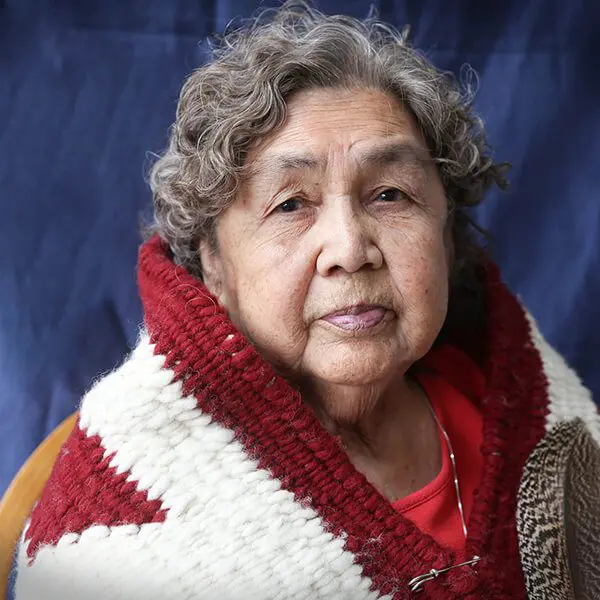
Amy has always been involved in trying to make things better for Indigenous people. She wanted to make things better for her kids than it was for her and her parents. “I’m still trying to make a difference. Sometimes I think I’m fighting a losing battle, says Amy, who acknowledges there is still much more to do.
Amy says a devastating impact of residential schools was that survivors learned to be emotionally disconnected. “In residential school we were taught not to feel, not to talk and not to cry,” says Amy. For many years, Amy has worked in the justice system and is now an Elder at the federal penitentiary for women in Abbotsford. Of the women she works with, she says they are also victims of the residential schools and the legacy of addiction and abuse. “They don’t know how to handle their emotions,” says Amy, noting that Indigenous people did not have jails pre-contact. Amy is passionate about reforming the justice system and the paternalistic approach of colonialism. She is involved in a project with the agency to establish an alternative justice system for Indigenous people.
Amy quit school at age 15 and took vocational training, eventually working for the provincial health department. She married and had five children; three sons and two daughters. Three of Amy’s sons passed away, and Amy believes it is because they were unable to share their issues and they self-medicated. Amy feels the Longhouse people with the drumming and singing is what got her through it. Amy has 13 grandchildren. She says she didn’t really get in touch with her culture and spirituality until she was 50 years old, when she was initiated into the Longhouse.
It was Amy’s desire and passion to make things better for Indigenous Amy says she knows firsthand that there is strength in families and that as an agency we need to trust that.